Introduction
The ad landscape is shifting again, and this time, it’s not driven by a new social network or a new algorithm update, but by AI assistants. As OpenAI moves toward monetising its massive free-user base, the introduction of ChatGPT ads is becoming increasingly likely in 2026. While OpenAI has not confirmed a launch date, job postings, reporting from industry analysts, and public comments from leadership strongly suggest that an ad-supported model is nearing. For marketers, founders, and small business owners, this shift signals the emergence of a new intent-driven channel, one that sits at the centre of how people search, compare, and make decisions online.
Why ChatGPT Ads Matter
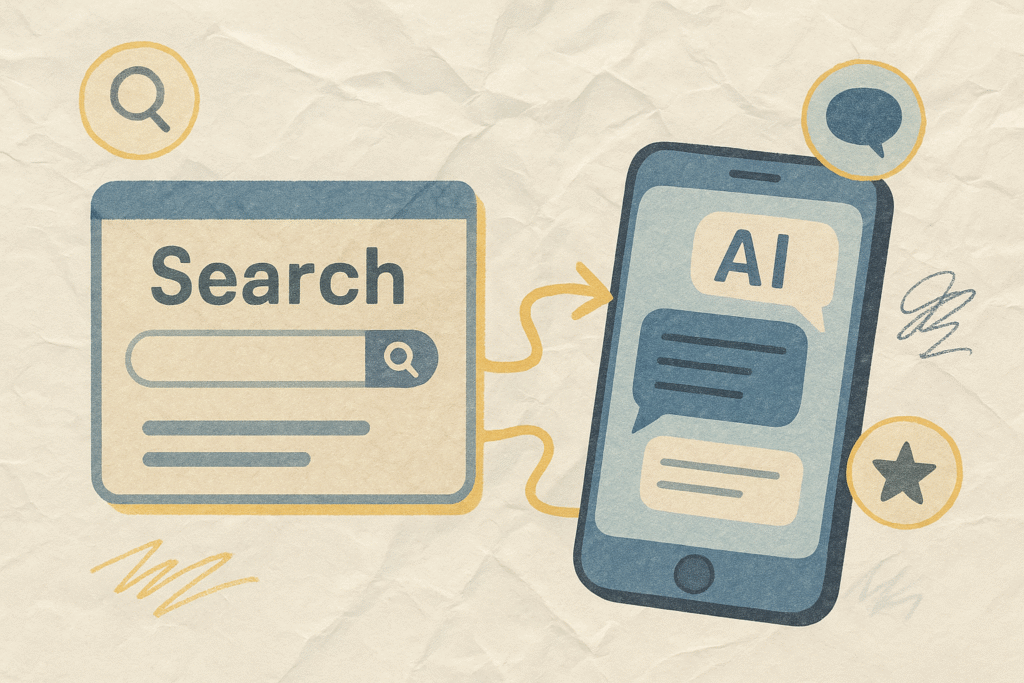
AI assistants are rapidly becoming the layer between the user and the web. Gartner predicts that traditional search engine volume will drop by 25% by 2026 due to AI chatbots and virtual agents replacing search queries. If this shift continues, then ads in ChatGPT will represent the first major advertising paradigm change since the rise of TikTok.
Unlike search engines, where ads interrupt a list of links, ChatGPT sits inside the user’s thinking process. People use it to compare options, research vendors, summarise reviews, and make decisions. In other words, ChatGPT sits at the point of highest intent, often moments before the user chooses a provider or product.
Additionally, the trust dynamic is different. People treat chat assistants more like advisors than media channels. If OpenAI introduces sponsored placements, carefully labeled but deeply integrated, businesses will have access to an environment where users are already asking direct, commercial questions.
From a user-behavior perspective, this means discovery and decision-making could become “zero-click”: no websites, no SERPs, just a conversational interface. For small businesses, this unlocks early-mover advantages. The first generation of ChatGPT advertisers will benefit from low competition, novel ad formats, and high conversion intent, much like early Google Ads in the mid-2000s.
What We Know About Ads in ChatGPT
Although OpenAI has not officially launched advertising, several verifiable signals point to a developing ad platform.
- Industry reporting confirms internal monetisation planning.
Articles from Search Engine Land report that OpenAI has been exploring ad formats and early concepts since late 2025. Analysts across the industry widely expect ads to become a major revenue driver.
- OpenAI is actively hiring for advertising-related roles.
Job listings for roles focused on growth engineering, monetisation infrastructure, attribution systems, and partner integrations suggest internal preparation for an ad ecosystem. This mirrors the hiring patterns Google and Meta used prior to launching their ad networks.
- Leadership comments signal openness, not denial.
Sam Altman stated that there were “no current plans” for ads in the newly launched Pulse feature but did not rule out ads in ChatGPT as a whole. TechRadar similarly reported that OpenAI would consider ads “only if they are thoughtful and tasteful”.
- External projections expect large revenue from ads.
Multiple industry analyses estimate that an ad-supported ChatGPT model could generate billions in annual revenue starting in 2026 (e.g., All About AI, DataSlayer, StubGroup). While these estimates are speculative, they reflect consistent market expectations.
Together, these signals strongly indicate that ChatGPT ads are on the horizon, even if the launch format and timing remain flexible.
What Remains Unclear About ChatGPT Ads
Despite rising expectations, several critical details are still unknown:
Ad format
OpenAI has not disclosed how ads in ChatGPT will appear. Possibilities include:
- sponsored responses
- sidebar placements
- branded citations
- conversational prompts
- product suggestions integrated into dialogue
Targeting capabilities.
We don’t yet know whether advertisers will target by query intent, user profile, topic category, or industry vertical.
Pricing model
CPC, CPM, CPA, conversational cost-per-engagement, any model is possible. OpenAI may introduce entirely new pricing frameworks specific to AI assistants.
Geographic rollout
It is unclear whether the U.S. will receive access first or whether OpenAI will launch globally.
Regulatory frameworks
The EU AI Act and Digital Services Act impose strict transparency requirements. Ads will need to be clearly labeled, and OpenAI must avoid opaque influence, especially in high-stakes categories.
These uncertainties mean businesses should prepare, but avoid assumptions about exact tactics until OpenAI releases official details.
How Businesses Should Prepare for ChatGPT Ads
Even without confirmed ad formats, marketers and small-business owners can begin preparing for ChatGPT ads now. The businesses that start early will gain significant advantage once the platform opens.
Prioritise authoritative, factual content
ChatGPT draws heavily from structured, credible sources. Brands with strong factual content, clear product descriptions, service explanations, pricing transparency, and expertise, are more likely to be referenced organically in AI responses.
Strengthen first-party data
Every new ad platform rewards advertisers with clean data pipelines and well-organised CRM systems.
Make sure that:
- your CRM is accurate, deduplicated, and categorised
- UTMs and naming conventions are standardised
- your lead routing is fast and reliable
- your tracking aligns with GA4 and offline conversions
When ChatGPT ads launch, attribution may look different, but solid data foundations will help you adapt quickly.
Build your measurement framework ahead of time
Create space for a new channel in your reporting:
- a placeholder for “AI assistant spend”
- rules for evaluating incremental conversions
- benchmarks for CPA/ROAS comparisons
- policies for mixed conversion paths
Treat ChatGPT ads like an upcoming beta channel, you’ll want to test it without disrupting existing campaigns.
Audit your conversational presence
Already, businesses can check how ChatGPT currently describes them:
- Does ChatGPT recommend your business?
- Does it show your correct services, pricing, and service area?
- Is competitor data more complete than yours?
Fixing inaccuracies now can influence both organic responses and future ad relevance.
Prepare for brand safety and compliance
ChatGPT will operate under stricter AI-ad rules than traditional platforms. Businesses, especially in regulated industries, should create internal guidelines for:
- acceptable messaging
- transparency requirements
- prohibited claims
- data privacy
- ethical advertising
This aligns with the broader trend: ethics is becoming a competitive advantage in marketing, not a constraint.
Budget Impact
When ads in ChatGPT launch, most businesses should expect to test the channel, but not overhaul their budgets immediately.
A reasonable forecast is:
- 2–5% of total ad spend allocated for testing during the first 6–12 months
- 5–15% reallocation from Google Search if ChatGPT ads outperform in intent-rich queries
- minimal immediate impact on Meta (different intent layer)
Measurement will be the biggest shift. AI assistants collapse the funnel, research, evaluation, and comparison happen in one interface. Traditional last-click attribution will not capture this behavior.
Expect new KPIs such as:
- assistant influence score
- share of assistant visibility
- conversational conversion paths
Budget allocation will need to evolve alongside these metrics.
Conclusion
The introduction of ChatGPT ads marks the beginning of a new era in digital marketing, one where conversational AI becomes the primary interface between users and information. While the exact details are still emerging, the direction is clear: businesses that prepare now will be positioned to benefit when the platform launches. Whether you’re a small business owner or managing multi-channel campaigns, this is the moment to strengthen your foundations, audit your presence, and get ready for the next major shift in digital discovery.